Khodynka Tragedy – 1896

Posted by Nick Efstathiadis


Khodynka-Tragedy-1896
 tumblr_o7e4ny0vBW1r65o3qo2_500
There was nothing grander than a Russian Imperial coronation, and great festivities had been planned to accompany the accession of Tsar Nicolas II on May 13 1896. To ensure that the population appeared suitably ecstatic, Muscovites would be encouraged to celebrate with the help of coronation gifts from their new absolute monarch. The appointed day was May 18. Bars and booths for distributing gifts were erected in a town square in northwest Moscow, at the beginning of present-day Leningrad Prospect.
This had been chosen because it adjoined Khodynka Field, a large open space capable of accommodating the large number of people who were expected to attend.
The plan was an unqualified success, for a vast crowd (later estimated to have contained up to 500,000 people) gathered on Khodynka Field by dawn, in anticipation of receiving their gifts – a commemorative mug, bread roll, slice of sausage and piece of gingerbread. There would also be free beer.
A large force of police was present to maintain order, but the 1,800 officers proved entirely ineffectual in the face of unfolding events.
Suddenly, a rumour started that there was insufficient beer for everyone and not enough gifts to go round. The consequences were catastrophic. The crowd pressed forward, creating a disastrous crush. Panic swept through the assembled masses, and in the ensuing rush to escape more than 1,300 were trampled to death, with a similar number injured.
The triumph Tsar Nicholas had anticipated ended in tragedy.
He was genuinely distressed and spent the day visiting hospitalized victims with his wife, Alexandra. But he allowed his own better judgement to be overruled by diplomatic advisers and attended a celebration ball at the French embassy that same evening, a decision that didn’t go down well with the shocked Russian public.
When: May 18 1896
Where: Moscow, Russia
Death toll: 1,389 people were kitted and over 1,300 injured.
You should know: The event that sparked the Khodynka tragedy – the coronation of a Russian emperor – would never be repeated. Nicholas II was the last tsar to rule, abdicating in 1917 before being executed with his family by Bolsheviks at Yekaterinburg in 1918. Opponents nicknamed him ‘Nicholas the Bloody’ as a result of Khodynka, the massacre of peaceful protesters by the Imperial Guard in 1905, and anti-Semitic pogroms.
Khodynka Tragedy – 1896 | Devastating Disasters

Vikings were not spurred to Greenland by warm weather, research shows

Posted by Nick Efstathiadis

Oliver Milman Saturday 5 December 2015

New analysis casts doubt on theory that change in climate influenced Vikings to move to Greenland in 985, and posits it would have been relatively cold

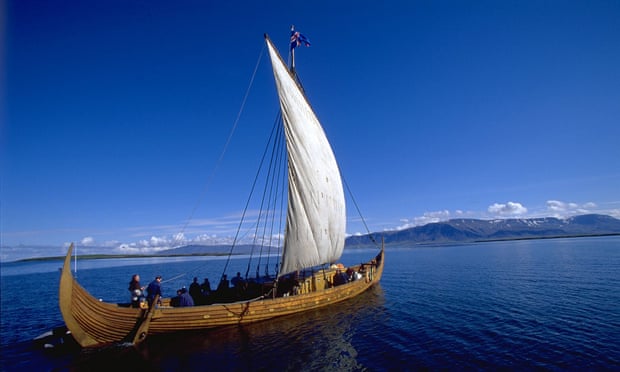
The replica viking ship Icelander.

The replica Viking ship Icelander. Photograph: Thorkell Orkelsson/AP

The Vikings’ arrival and departure from Greenland was not heavily influenced by the so-called medieval warm period, according to new research that casts doubt that the climatic change was a global phenomenon.

Viking seafarers, led by Erik the Red, are understood to have expanded from Iceland to south-western Greenland around 985. The Norse population grew to about 3,000 to 5,000 settlers, harvesting walrus ivory and raising livestock. But the colonies disappeared by 1460, with the local Inuit population remaining as the only inhabitants before Europeans again arrived in the 1700s.

Previous theories have suggested that a warming climate allowed Norse people to push further north to the frigid expanses of Greenland, before leaving as temperatures dropped again. In what has become known as the medieval warm period, temperatures rose from around 950, with the generally balmier conditions lasting until 1250, before the arrival of what is known as the little ice age.

But new analysis of glaciers in Greenland shows that there was no significant change in their extent during the medieval warm period, suggesting that it remained relatively cold throughout the Viking colonisation of Greenland.

US geologists measured an isotope found in rocks once covered by glaciers to determine how long they have been exposed to sunlight. The results from western Greenland and Baffin Island show there was no major fluctuation during the medieval warm period, with other records from sites closer to Viking settlements showing the same.

While it takes some time for glaciers to retreat due to warming temperatures, scientists say there would have had to have been a huge increase in precipitation, of around 50%, to have held the Greenland glaciers steady. As there is no evidence of such an increase in rainfall, the research suggests that the medieval warm period was confined to certain areas, such as Europe, and did not stretch to all corners of the world.

“The Vikings thrived for a few centuries in a cool climate before they left, so to say the cold made them leave is a bit of a stretch,” said Nicolas Young, a glacial geologist at Columbia University and lead author of the study, published in Science Advances.

“This is a regional study so we don’t want to say there was no medieval warm period,” Young said. “In Europe it was certainly warmer. We just aren’t sure there was the warming we saw in Europe as the glaciers look fairly healthy throughout this time.”

Previous research has painted a complex picture of the climate of Greenland during Norse occupation. Study of an ice core extracted in 2011 shows temperatures dropped as Vikings arrived, with warming intervals during their stay. A separate study suggests it may have been warmer when the Norse arrived but then the climate started cooling in 1160, before the start of the little ice age.

Astrid Ogilvie, a climate historian currently at Iceland’s Akureyri University, said: “I do not like the simplistic argument that the Greenland people went there when it was warm, and then ‘it got cold and they died.’

“I think the medieval warm period has been built on many false premises, but it still clings to the popular imagination.”

There are several other potential reasons why the Norse departed Greenland. The value of ivory from walrus tusk may have dropped, removing the economic reason to colonise the area. There may also have been conflict with the local Inuit population.

“I don’t want to say climate didn’t play a role, but this suggests that socio-economic reasons were more important,” Young said. “It’s probably a combination of factors but we need to think about this a bit more.”

If the medieval warming period was localised, it sets it apart from the current rise in temperatures that has reached every corner of the world. Indeed, the polar areas have warmed more sharply than other parts of the planet.

A study published in August states that the current decline of the world’s glaciers is “historically unprecedented”. Researchers have identified rapid rises in melt water and alarming cases of glacial retreat in Greenland, west Antarctica, the Canadian and Alaskan coastal mountains, in Europe and in the Himalayan massif.

One satellite-based study, confirmed by on-the-ground measurements, of the Jakobshavn glacier in Greenland, confirms that the river of ice is now moving at the rate of 46 metres a day, 17 kilometres a year, which is twice the speed recorded in 2003, which in turn was twice as fast as measured in 1997.

Vikings were not spurred to Greenland by warm weather, research shows | World news | The Guardian

The Strangest Battle of WWII - When Germans And Americans Together Fought The SS

Posted by Nick Efstathiadis

M4-Sherman_tank-European_theatre

Hitler killed himself on 30 April 1945, but some German units fought on, regardless. Shortly after Hitler's suicide, some 435 miles south in Austria, a strange battle would take place – one where Germans and Americans fought together against other Germans from the SS.
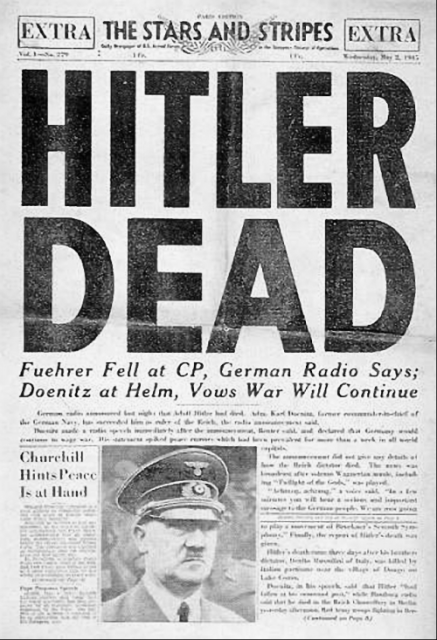
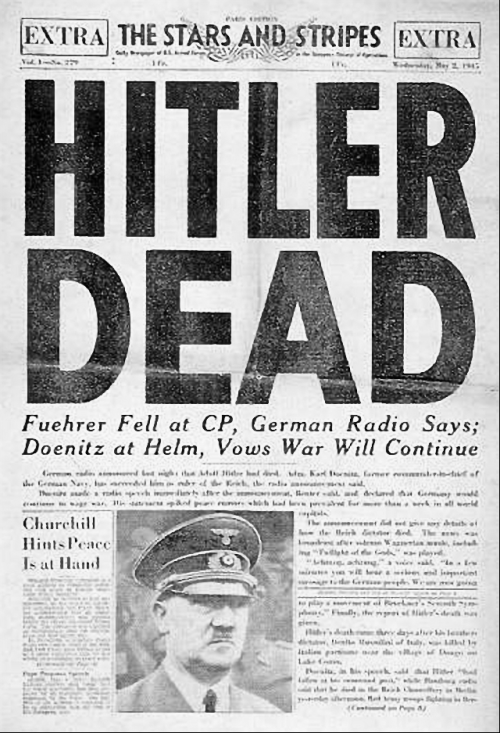
The announcement of Hitler's death in the Stars and Stripes newspaper

The announcement of Hitler’s death in the Stars and Stripes newspaper

It took place at Itter Castle: a high-class prison where the German government kept high-ranking French VIPs, as well as their wives and mistresses. Serving them and maintaining the castle were Eastern European prisoners from Dachau.
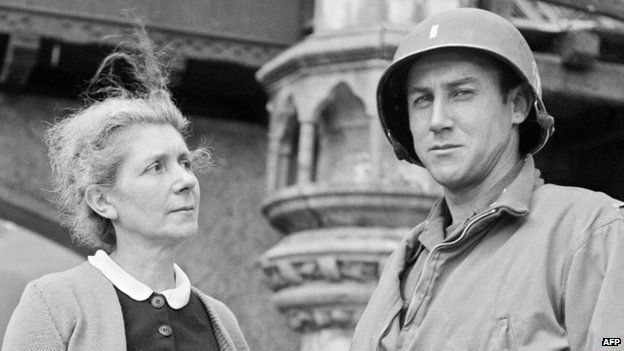
Marie-Agnes Cailliau, sister of former President Charles de Gaul, was one of those interned at ItterMarie-Agnes Cailliau, sister of former President Charles de Gaul, was one of those interned at Itter

On May 2, the SS commander in charge, Eduard Weiter, finally heard of Hitler’s death; so he shot himself. This left the castle to his second-in-command, Sebastian Wimmer.

With help from his French prisoners, Wimmer wrote a letter asking the Americans for help. He knew that Nazi loyalists were still out there, and that his charges were living on borrowed time.

The next day, he gave the letter to Zvonimir Čučković, a Yugoslav inmate, and told him to give it to the first American soldier he found. Čučković found the 409th Infantry Regiment at Innsbruck, but heavy shelling kept them trapped.
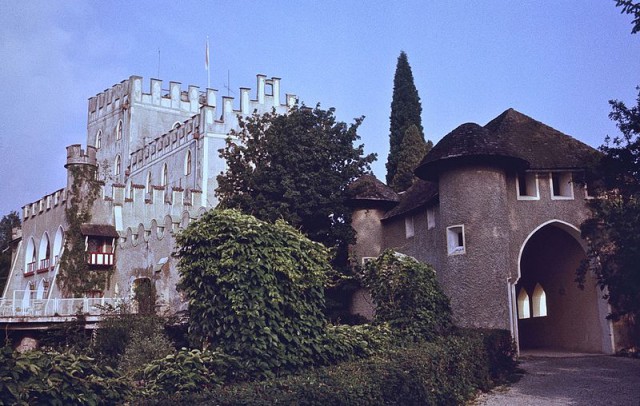
Itter Castle todayItter Castle today

Since Čučković hadn’t returned by May 4, Wimmer sent another prisoner to look for the Americans: Andreas Krobot, the prison’s cook. Then Wimmer fled with his wife, leaving the castle in charge of Kurt-Siegfried Schrader, an injured Waffen-SS officer who had earlier befriended the French.

With Wimmer gone, the other German soldiers abandoned their post, leaving the castle to Schrader and the prisoners. Afraid of the loyalists outside, Schrader and the rest broke into the ammunitions room and began arming themselves.

Krobot bicycled his way to the nearby town of Wörgl and found the Austrian Resistance, instead. To his surprise, they had teamed up with Wehrmacht defectors under the command of Major Josef Gangle.
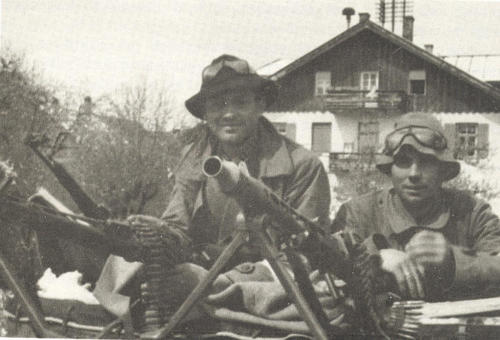
Two Austrian resistance fighters with German MG-42 machine gunsTwo Austrian resistance fighters with German MG-42 machine guns

Some eight miles to the north, Captain John C. “Jack” Lee had just arrived in Kufstein with four Sherman tanks of the 23rd Tank Battalion. He was waiting for reinforcements from the 142nd Regiment, when Gangle surrendered to him and told him about Itter. Lee’s superiors approved the rescue, so he headed toward the castle with Gangle and a joint US-German force of 26 men.
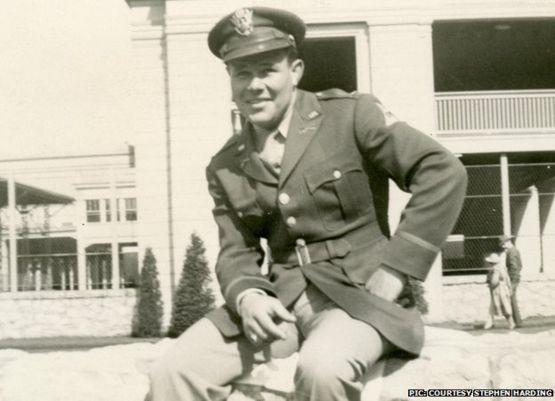
Captain Jack LeeCaptain Jack Lee

The Americans at Innsbruck, meanwhile, finally made their way toward Itter under Major John Kramers. With him was American war correspondent, Meyer Levin, and French photographer, Eric Schwab. They also had four M10 tank destroyers, three jeeps, and soldiers from the 411th Infantry Regiment.
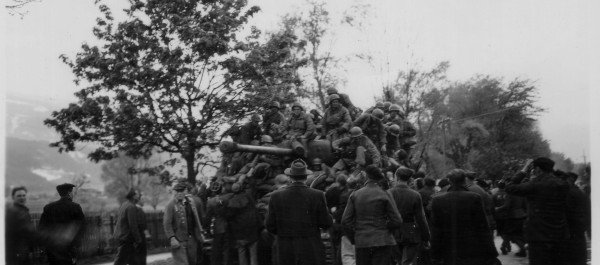
American troops arriving at Innsbruck on 3 May 1945American troops arriving at Innsbruck on 3 May 1945

At Wörgl, the people asked Lee to leave behind some of his men and tanks for protection since a few Nazi soldiers were on a killing rampage as they retreated back to Germany. He agreed. Four miles from Itter, his group got into a skirmish with some SS troops before they finally reached the castle.

Although the former prisoners were happy to see the captain and his men, they were not impressed with the size of their rescue team. Lee placed his tank, the Besotten Jenny, at the main entrance and told the inmates to hide. They refused. At 11PM, Waffen-SS troops took pot-shots at the castle to test its defences, but the thick stone walls protected those inside.
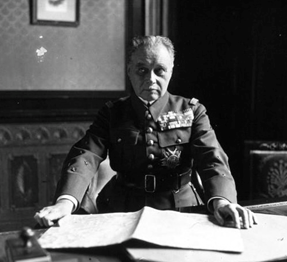
General Gamelin survived the battle

General Gamelin survived the battle

At first light on May 5, some 100 to 150 German soldiers attacked in force. An 88mm antitank gun destroyed a room that had been occupied by French General Maurice Gamelin. The Besotten Jenny, manned by Corporal Szymcyk, returned fire, but it was also taken out by the 88mm. Fortunately, Szymcyk escaped.
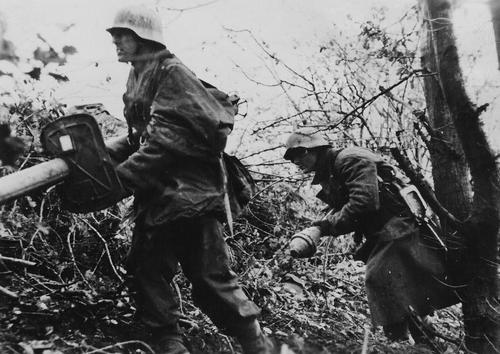
two Waffen-SS troopers with anti-tank weaponsTwo Waffen-SS troopers with anti-tank weapons

The American and German forces within returned fire, as did the French VIPs, their women, and the other inmates. Gangle was the first casualty, taken out by a sniper as he stood on a roof trying to locate the antitank gun.
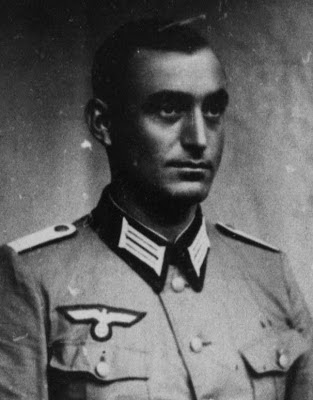
Wehrmacht Major Josef “Sepp” Gangl

Wehrmacht Major Josef “Sepp” Gangl

But Kramers’ group was close. They had arrived at Wörgl, and since it lay in the jurisdiction of the 36th Infantry Division, he had to leave his men and equipment behind as reinforcements. The major tried to radio Lee, but couldn’t get through, so he picked up a phone and reached him.
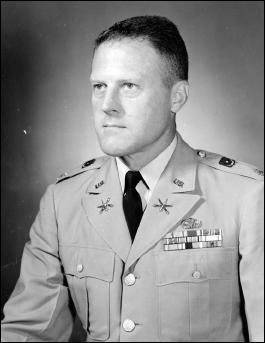
Maj. John T. Kramers

Major John T. Kramers

Lee told Kramers they were running out of ammunition. Frustrated, Kramers loaded up a jeep with weapons, and with three others, made his way to the castle. As they left town, they heard the gunfire get louder.

Fortunately, the closer the four got to the castle, the more their numbers grew. They were joined by the advanced party of the 2nd Battalion. The 142nd Infantry (whom Lee was waiting for), were already ahead of Kramers’ group.

By noon, the defenders had almost no ammunition left. Communications were down, but Lee was convinced he’d get more if he could just get another message out to Wörgl. Jean Borotra, a French tennis champion, volunteered to go.
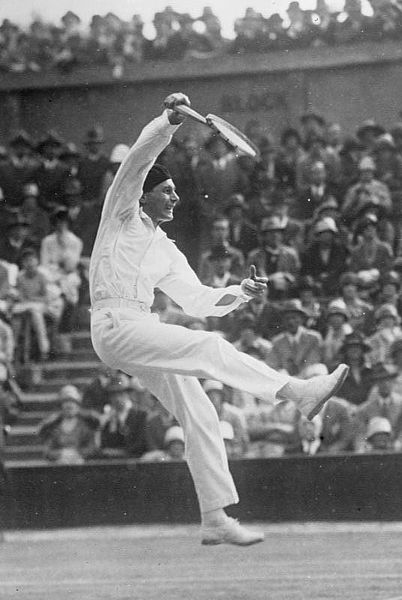
Jean Borotra

Jean Borotra

With little choice, Lee let him, so the Frenchman ran through the cramped village streets beside the castle while eluding enemy fire. He made it. Once at Wörgl, Borotra asked for a uniform from the Americans and joined them as they made their way back to Itter.

To conserve ammunition, Lee ordered a retreat from the outer walls. They intended to make their last stand deep inside where they could engage in hand-to-hand combat, if need be. By 4PM, with no more return fire from the castle, those outside began making their way in.

A little after 4PM, however, a Wehrmacht soldier standing on a roof cried out, “American tanks!”
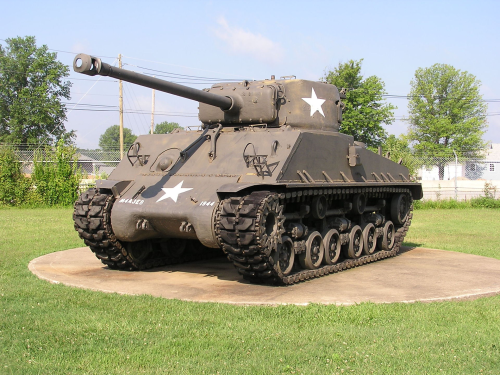
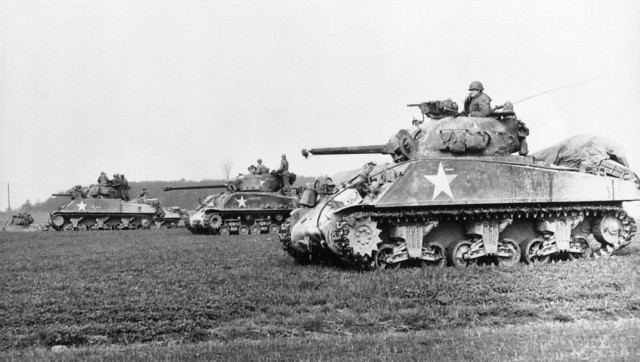
An M4 Sherman Tank at the George Patton Museum in Fort Knox, KentuckyAn M4 Sherman Tank at the George Patton Museum in Fort Knox, Kentucky

He was right. Several tanks (including some that Lee and Kramer had been forced to leave behind at Wörgl) were making their way toward the castle, followed by more American troops. About 100 of the attackers surrendered to the American relief forces.

The first to reach the besieged were Technical Sergeant William E. Elliot and Sergeant Glenn E. Sherman. According to Levin, Lee didn’t thank the two. He instead asked, “What kept you!?” That’s when they started laughing.
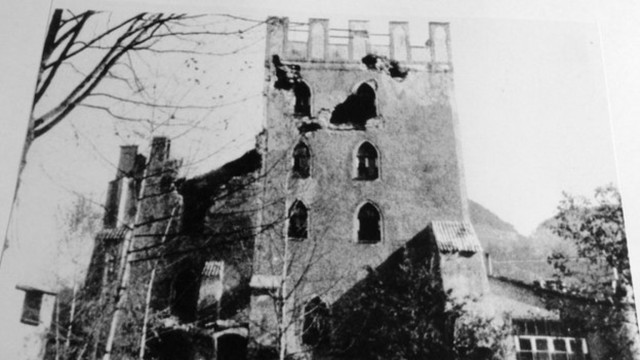
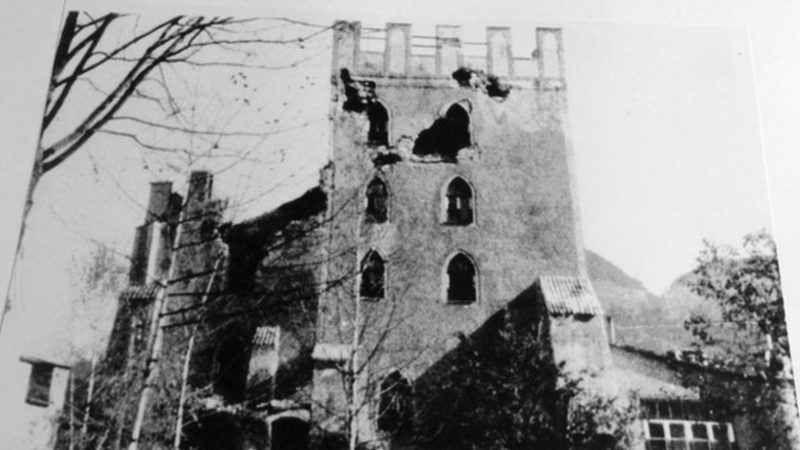
Itter Castle after the battle taken by SchwabItter Castle after the battle taken by Schwab

Two days later, Germany signed an unconditional surrender to the Allies.

In 1972, a reporter asked Lee how he felt about fighting with German soldiers against other German soldiers.

He replied, “Well, it was just the strangest thing!”

The Strangest Battle of WWII - When Germans And Americans Together Fought The SS

7 Surprising Facts About King Henry VIII - Biography.com

Posted by Nick Efstathiadis

Author: Sara Kettler Publish date: Jun 24, 2015 History & Culture

Today in 1509 Henry VIII was crowned King of England. Here are some surprising facts about the Tudor monarch who still fascinates us.

A portrait of Henry VIII by the workshop of Hans Holbein the Younger. (Image courtesy of Wikimedia Commons)A portrait of Henry VIII by the workshop of Hans Holbein the Younger. (Image courtesy of Wikimedia Commons)

On June 24, 1509, the coronation of Henry VIII was completed. But as his reign progressed, he grew desperate for a son who’d carry on the Tudor dynasty. When the pope wouldn't annul his first marriage so that Henry could wed again, he took matters into his own hands.

Henry was a king who hadn’t been expected to rule — he only took the throne because his older brother had died — but he ended up embarking upon a religious reformation, cracking down on dissent and marrying a grand total of six wives. In honour of Henry’s coronation, and the unexpected chain of events that followed, here are some surprising facts about the Tudor monarch.

1. Henry Just Wanted to Have Fun

When Henry ascended to the throne, he seems to have followed a philosophy of working to live, not living to work. Most mornings he didn’t get up until eight o’clock (making him a late riser for the times). Once he was out of bed, he preferred hunting or hawking over the business of governing.

When his outdoor activities ended, Henry could find time to meet some of his obligations, but work had to be completed quickly — his nights were usually filled with dancing, gambling or playing cards.

This isn’t to say that Henry wasn’t the man in charge — he met regularly with his secretary and ambassadors, and he had a prodigious memory that helped him make an array of kingly decisions. But while ruling the land, he also made sure to enjoy himself.

2. Henry Was an Author 

When Martin Luther’s Ninety-five Theses challenged papal authority, Henry managed to pull himself away from hunting in order to support the church in Rome by writing Defense of the Seven Sacraments (Assertio septem sacramentorum) in 1521. This 30,000-word text became a best-seller.

To thank Henry — who was the first English king to write and publish a book — the Pope named him “Defender of the Faith.” Though Henry later broke with the Catholic Church, he never relinquished this title.

3. Henry Wasn't Great with the Ladies

Besides the whole ruling a kingdom thing, what else made a young Henry attractive? Well, he was tall (over six feet), in good shape (thanks to his love of hunting and jousting) and had beautiful reddish-gold hair.

If there had been a Tudor equivalent of Match.com, Henry also could’ve shared the fact that he was an accomplished musician who sang and played instruments such as the recorder and the lute. In addition, he composed and arranged music himself (his work includes "Pastimes with Good Company," but, contrary to rumour, he wasn’t the man behind "Greensleeves").

Catherine Parr was Henry VIII's sixth and final wife. She was married to him from 1543 until his death in 1547. (Image courtesy of the National Portrait Gallery/Wikimedia Commons) Catherine of Aragon, Henry the VIII's first wife, was married to him from 1509-1533.  Her refusal to agree to an annulment of their marriage led to the creation of the Church of England. (Image courtesy of Wikimedia Commons) Henry VIII's second wife Anne Boleyn was married to him from 1533 to 1536. After Anne gave birth to a stillborn son in January 1536, Henry VIII had her detained at the Tower of London on several false charges, among them adultery, incest and conspiracy. Their marriage ended with her beheading. (Image courtesy of Wikimedia Commons)

Gallery 6 Images

However, all this didn’t make Henry a smashing success with the opposite sex. As Professor Diarmaid MacCulloch of Oxford University told The Telegraph in 2015, "His sexual shenanigans were not all that great by the standards of most monarchs of the time. He had six wives but having six wives is proof that you’re not really good with ladies — not the other way around."

4. Henry the Hypochondriac

Though Henry was a healthy young man, he was still paranoid about getting sick and dying. Given the times, there were plenty of illnesses for him to worry about, but two particular concerns were the sweating sickness (a common and often deadly ailment) and the plague.

During outbreaks, Henry tried to minimize his risk of infection by steering clear of those who might’ve been exposed to disease. When a severe wave of the sweating sickness hit in 1517-18, Henry left London for nearly a year. At one point during the outbreak, the king refused to see ambassadors (however, his isolation was limited because he needed servants to take care of him).

Henry was so committed to self-preservation that when his paramour Anne Boleyn caught the sweating sickness in 1528, he stayed away until the illness had passed (though he did send a physician to check on her). Anne didn’t hold a grudge about this and went on to wed Henry in 1533 — however, considering that their marriage ended with her being beheaded a few years later, perhaps she should have been warier of Henry’s devotion to his own self-interest.

Henry VIII was so taken by Anne Boleyn, he broke with the Catholic Church because the pope wouldn't annul his first marriage, leading to the formation of the Church of England. Anne gave birth to the future Queen Elizabeth I, but didn't birth a male heir. Henry VIII had Anne arrested on charges of adultery, incest and witchcraft and then had her beheaded. (Photo: Getty Images)Henry VIII was so taken by Anne Boleyn, he broke with the Catholic Church because the pope wouldn't annul his first marriage, leading to the formation of the Church of England. Anne gave birth to the future Queen Elizabeth I, but didn't birth a male heir. Henry VIII had Anne arrested on charges of adultery, incest and witchcraft and then had her beheaded. (Photo: Getty Images)

5. Henry Didn’t Age Well

Precautions against the plague and the sweating sickness helped keep Henry safe from those diseases, but he wasn’t able to protect himself entirely against ill health.

As he grew older, particularly once he entered middle age, Henry put on a massive amount of weight. Suits of armour showed that his waistline, which had measured 32 inches in 1512, grew to 54 inches; Henry weighed nearly 400 pounds when he died in 1547. In his later years, the king also suffered from painful ulcers on his legs and had trouble standing and walking.

In fact, given Henry’s health problems, his last wife, Catherine Parr, was often like a nurse to him. Still, she survived her husband with her neck intact, so, all in all, things could’ve turned out much worse for her.

6. The Antigen Hypothesis

Was Henry’s blood responsible for his difficulty in siring a male heir? In 2011, bio archaeologist Catrina Banks Whitley and anthropologist Kyra Kramer shared their theory that Henry was a member of the rare blood group that is positive for the Kell antigen. This means that if the king impregnated a woman, and the baby inherited Kell-positive status, the mother would build up Kell antibodies. Though that first pregnancy would likely not be affected, future Kell-positive foetuses would be attacked by those antibodies.

The fact that Henry’s first wife, Catherine of Aragon, experienced many miscarriages and the loss of children soon after birth fits this theory. (One daughter, Mary, survived; though Mary wasn’t the result of a first pregnancy, winning the genetic lottery could’ve helped her to survive — if she’d been Kell negative, her mother’s antibodies wouldn’t have affected her).

Henry’s other partners fall into the expected pattern. While Anne Boleyn had a healthy firstborn, Elizabeth I, her subsequent pregnancies ended in miscarriage. Henry’s other known children — Edward VI and the illegitimate Henry Fitzroy — were also first pregnancies for their respective mothers.

Obviously the science to prove or disprove this hypothesis didn’t exist in the Tudor era, but it wouldn’t have mattered if it had — anyone who tried to tell Henry that he was the real problem would’ve been risking her head.

7. We Still Don't Understand Henry

Henry’s been dead for several centuries, but researchers and biographers still wonder how to explain the paranoia, volatility and tyrannical behaviour he demonstrated in later years. Among the theories:

  • Henry had syphilis: Probably not, as this speculation has been credibly debunked. For example, if Henry had been given mercury — the go-to treatment for syphilis at the time — it would’ve been almost impossible to hide the side effects.
  • A jousting accident left Henry with brain damage: The king did have a serious jousting accident in 1536… but he didn’t display a sudden personality change afterward, so this theory is also questionable.
  • Henry had McLeod syndrome: This syndrome could account for Henry’s later mobility issues; it also results in cognitive impairment. Lastly, it’s tied to the Kell blood group, so the pregnancy problems experienced by Henry’s partners are another indication in its favour.

Whatever future research proves (or disproves), it’s certain people will continue to be interested in uncovering just what made Henry tick.

7 Surprising Facts About King Henry VIII - Biography.com

What the Average Anzac Took Into Service with Him…and What He Brought Home

Posted by Nick Efstathiadis


For the majority of young Australian men who joined the Australian Imperial Force [AIF] during the First World War, it was their first time separated from family, a familiar world and most certainly, in battle. Many of these men would have experienced an element of compulsory military training in the Citizens Military Forces or Cadets, but almost never in wartime. Most were single men, lived with their families and knew little about the world around them, beyond a brief British-centric colonial education. This ANZAC Day, 25 April 2015, in the Centenary year of the Gallipoli Campaign, we will pay closer attention and homage to their service and sacrifice.

The experience of service during the First World War gave young men the opportunity for adventure, escape from the boredom of everyday life, a chance to visit the ‘Mother’ country and a chance to possibly cement a future through reputations earned. Men departed in the tens of thousands, fearful of missing the ‘big show’ and eager to prove their worth. They ultimately accepted death, as long as it was quick and painless.

Men of the first A.I.F. departed their homes carrying small comforts of a life that they knew. In their minds, the reality was that the material structure of those lives would remain in situ for the period of their service. Hindsight has proved that for many of those men, who were often on active service for four or more years, the reality was far from the truth. Life continued on in their absence.

The question of what the average Australian Anzac took with them into service provides a most interesting social insight into the nature of Australian society into the second decade of the 20th Century. What those same men brought back to Australia is equally as unique.

Aside from the ‘official kit’ that was supplied to the members of the AIF, they also carried many personal artefacts. These items represented the average soldier’s societal calling, religious affiliation, employment, love of family, desire to return to civilian life following service, or were keepsakes from the aforementioned life that they knew, having been secreted away from a loved one.

For the first Australian Anzacs, the Gallipoli Landers, their assault possessions would have been purposely kept to a minimum. Instructed to carry emergency rations and water for twenty-four hours, additional personal items were stowed in kit bags on-board transport ships for delivery later. Rations would have consisted of Bully beef (tinned corned beef), rice, jam, cocoa, tea, some bread and hard tack, or “ANZAC Wafer”; a rock hard biscuit that was often ground to make alternative meals.

The Anzacs carried varying smaller items on their person, often in the breast pockets of their often over-sized uniforms. Smoking paraphernalia such as ‘Woodbines’ Cigarettes or a Bakelite pipes were commonplace overtime, even for original non-smokers. The comfort of tobacco was a small consolation in the trenches and a ready source for barter and trade. Photos of loved ones for those ‘quieter’ moments of reflection were also often carried in breast pockets for easy access around uniform webbing. Either singularly stowed or within a keepsake notebook, bible or small hold-all, such photos were a direct connection to a distant life. Commonplace with Anzac mythology, the bible kept close to the heart could on occasion offer possible divine intervention by stopping a errant or stray bullet from shortening a Digger’s service. Letters, notes, poetry, postcards, and other memory artefacts such as pocket watches, compasses and lighters were also carried on the person.

In recent years, the discovery of the bodies of 250 Australian solders in mass graves outside the small village of Fromelles in northern France, has given us greater insight into what the average Australian had on their person. Some 6,200 artefacts were removed and catalogued during the archaeological dig and recovery of the bodies for identification. These included usual pieces of military uniform such as buttons, buckles, fabric and even the occasional boot, often with Australian maker’s marks. However, many objects recovered reflected a soldier’s daily life a fountain pen, a bible, a French phrase book, and a leather pouch with coins still inside.

More personal and intimate things included rings and bracelets, rosary beads, a lock of hair in a leather heart and a commemorative medallion from the local district presented to one of the Diggers prior to his departure. Ironically, a return rail ticket from Fremantle to Perth in Western Australia was found. The purchaser, then to soon be a soldier, would have intended to use the return section of the fare upon his cessation of service. A number of smoking pipes were also recovered, often in the breast pocket area of the remains discovered. In military service of the era, smoking was commonplace and for many men it assisted with the monotony of military life and the aromas of No-Man’s Land.

Often, the curious larrikin nature of the Australian Digger would result in the collection of souvenirs from the battlefield or enemy. John “Barney” Hines, a British-born Australian soldier of World War I, was particularly known for his prowess at collecting souvenirs from German soldiers. The German Pickelhaube or spiked helmet was a prized find and one such example was found in the knapsack of Private Alan James Mather, No. 1983, when his body was recovered from the Messines battlefield in Belgium almost 95 years after he disappeared. He was identified and reinterred in Prowse Point Cemetery in Flanders. Pistols, particularly German Lugers and Mausers, were prized by the Anzacs, often being reused during trench raids and silent attacks. These souvenirs were brought home after the war.

After four long years of campaigning, the Australian Diggers had procured a vast array of souvenirs, personal effects and essential non-official kit. Compiling a full inventory of the quintessential items within a returning solder’s kit would not be feasible. However, the greatest insight into the personal effects of the Anzacs that may have been brought home to Australia after the war, is to examine the service records of fallen men. Captain Leslie Russell Blake MC, No. 7306, 5th Brigade, Australian Field Artillery, of Hawthorne, Victoria was killed in October 1918. His service file indicates that following his death, three storage items were returned to his family in probate; a tin trunk, a sealed suitcase and one parcel. The contents each package was as follows:

In contrast, Lance Corporal Benjamin Lancaster, No. 3814, who enlisted at a similar time to Captain Blake, had his own personal effects returned to his family. The package consisted of one Wallet, 2 Badges and a purse.

Despite the hardships of war and throughout the service of the Australian Anzacs during WWI, there remained a willingness of the individual soldier to maintain personal effects. Whether fulfilling a link to home and past, out of necessity for survival, or through curious larrikinism, the personal nature of the Anzac’s possessions were as varied as the characters themselves.


What the Average Anzac Took Into Service with Him…and What He Brought Home

Magna Carta: archaic tax document and icon of liberty

Posted by Nick Efstathiadis

By Chris Berg Tuesday 9 June 2015

The Magna Carta came to symbolise general limits on royal power. 

Photo: The Magna Carta came to symbolise general limits on royal power. (Reuters, file photo)

If our liberties can be traced back to a peace treaty between a 13th century English king and the barons, then it is in resistance to tax that they were forged, writes Chris Berg.

The Magna Carta turns 800 years old next week.

The document has become an icon of liberty, variously credited with establishing everything from parliament to the rule of law. It is such a fixture of popular political thought that it is still rhetorically powerful eight centuries later. The Abbott Government's proposed citizenship law changes have been widely condemned as a violation of its principles.

This is strange for something so archaic. The Magna Carta consists of about 3000 words of 13th century legalese about inheritance, feudal payments, land tenure and customary rights, in Latin, reflecting the economic and political concerns of a world distant from our own.

There's one simple reason that the Magna Carta became the document of individual rights and a check against power that it is today.

If you want to understand the Magna Carta, you need to understand that it is about tax.

Most commentary on the document is written by lawyers looking for the origins of the English common law and rights like habeas corpus. This means delving through the complexities of medieval land law and legal systems.

Yet the vast majority of the provisions of the Magna Carta are specifically designed to limit how much tax the king can take from his subjects. As the historian David Carpenter writes, the document was "above all about money."

If our liberties can be traced back to the Magna Carta, then it is in resistance to tax that they were forged.

By 1215, King John had spent 10 years soaking England for as much revenue as he could in order to reclaim his family's European possessions.

John's royal family had presided over an empire that stretched from Ireland to the French-Spanish border. But John had lost much of the continental empire shortly after taking the throne in 1199. John needed money to build an army to recapture his patrimony.

He levied feudal dues far beyond what Englanders were used to, ramped up customary legal charges, sold privileges and otherwise grabbed opportunistically at the wealth of the kingdom. Some historians have described John's fiscal approach as "asset stripping" England.

John eventually invaded Europe in 1214. But he lost. This defeat sparked a civil war in England. The barons, a tiny, extremely rich sliver of the population, were sick of paying for John's futile foreign adventurism.

The Magna Carta was supposed to be a peace treaty between the king and the barons. Hence, the shopping list of provisions that constrained the king's revenue collection.

But it is one thing to write rules about what government may lawfully do; it is quite another to enforce them.

The Magna Carta did not invent parliament. Parliament-like bodies appeared in England several centuries earlier. But the Magna Carta gave parliament its purpose - and its leverage over the monarchy. One provision stated that feudal charges could only be imposed "except by the common counsel of our realm". This rapidly became a political norm whereby the parliament had to approve any requests for new tax.

For centuries the English parliament used the threat - sometimes implicit, sometimes explicit - of withholding funds to carve out more power against the monarch.

Over time this evolved into a basic assertion of political equality. The cry of "no taxation without representation" was used by the American revolutionaries and the 20th century suffragettes alike.

Now, the tax revolt that led to the Magna Carta was a revolt of elites, not the general population. And in many ways what the barons won in 1215 enhanced their position in comparison to everybody else.

Obviously, the mere existence of parliament is no guarantee of liberty. A rebellion in 1381, the Peasant's Revolt, was sparked by parliament's predatory introduction of a poll tax. The elites that controlled parliament were happy to impose repressive taxes on those below them.

There was no Magna Carta after the Peasant's Revolt. The rebels were massacred. Yet it wasn't until 1989 that an English government attempted to introduce a poll tax again, and that time it led directly to Margaret Thatcher's downfall.

There's a tradition of history, derided as 'Whig history', in which the past is studied firmly with an eye on the present. In this tradition, the practice of history consists primarily of identifying the origins of contemporary practices and institutions, skipping over what makes the past alien and different - the historical dead ends and forgotten beliefs.

The Magna Carta holds a preeminent place in Whig histories as the source of English freedom. And not wrongly, either. Because those obscure Latin clauses became, in the hands of propagandists and revolutionaries decades and centuries after June 1215, a document symbolising general limits on royal power.

Anachronistic misunderstandings of the Magna Carta were themselves a force for liberal progress.

So to celebrate the Magna Carta is to celebrate 800 years of its history, not the specific rules it imposed about, for instance, the receipts of an estate's earnings while it was held in wardship.

It is to celebrate how this strange, failed peace treaty established a permanent relationship between tax resistance and political freedom in the English-speaking world.

Chris Berg is a senior fellow with the Institute of Public Affairs. Magna Carta: The Tax Revolt That Gave Us Liberty, co-authored with John Roskam, will be released shortly.

Magna Carta: archaic tax document and icon of liberty - The Drum (Australian Broadcasting Corporation)

What was the incentive to go on the Crusades in the Middle Ages?

Posted by Nick Efstathiadis

Stephen Tempest, qualified amateur historian

The First Crusade was one of the most remarkable episodes in history. All over Europe, over 100,000 people of multiple nationalities - out of a total population that probably numbered no more than 30 million - spontaneously decided to leave their homes and families, walk 5,000 kilometres through mountains and deserts, and fight a war from which few of them would ever return. 
Later Crusades would be organised by governments, and were better-planned, and often went by sea instead of walking. The other answers to this question have already discussed the mundane and secular reasons for such campaigns - geopolitics, the desire for land, for political status, to find a distraction for troublesome warriors. All of these apply to a greater or lesser degree. However the First Crusade can only be explained as a mass popular outbreak of religious fervour, unplanned and unexpected. 
In about the year 950, the Seljuk tribe of Turkic nomads from Central Asia converted to Islam. They then swept across Iran as conquerors, heading west. In 1055 they captured Baghdad. In 1064, their new leader Alp Arslan invaded and conquered Georgia and Armenia. In 1071 he defeated the Roman army at the Battle of Manzikert, overrunning most of Anatolia and threatening Christian rule in Constantinople itself. His son would expand the Seljuk empire further, capturing Syria and Palestine and triggering a long-running war with the Fatimid dynasty who ruled Egypt.  
The Seljuk invasion triggered a long period of instability and chaos in the Middle East. This was obviously bad for the inhabitants, but it also had negative effects on the Christians who were accustomed to make pilgrimages in large numbers to the Holy Places in Palestine - Jerusalem, Bethlehem, Nazareth and others. The previous Arab Muslim rulers of the region had welcomed these free-spending Christian visitors and protected them. The Turkish Seljuks, however, with the fervour of recent converts to Islam, were much more intolerant. Pilgrims were harassed and persecuted. 
It's unclear how much the people back in Europe were aware of these political changes in the Middle East. From their perspective, it could simply be that the 'Saracens' - their collective name for Muslims of all races - had suddenly decided to start persecuting Christians for obscure reasons of their own. 
For Emperor Alexius I in Constantinople, the Seljuks didn't only threaten a few pilgrims, but the very existence of his empire. In March 1095 he sent a message to Pope Urban II in Rome asking for help. It's likely that what he was expecting to receive was a group of Italian or French mercenary warriors or volunteers to serve in the Byzantine army. He certainly didn't expect 130,000 religious fanatics under no control but that of their own elected leaders... 
It's possible that the Pope had already considered the idea of summoning Christian warriors to go and fight the Saracens, and so Emperor Alexius's request came at an opportune time for him. He embarked on a year-long tour of Europe, primarily in France, preaching in a theatrical manner to large audiences. The response was immediate and huge; many in the crowd swore vows there and then to go to liberate Jerusalem. As news spread, many people in places the Pope hadn't visited - in southern Italy, England, Germany and Spain - also swore to go on Crusade.

"This royal city (Jerusalem), situated at the centre of the world, is now held captive by His enemies, and is in subjection to those who do not know God, to the worship of the heathens. She seeks and desires to be liberated, and implores you to come to her aid. Undertake this journey for the remission of your sins, with the assurance of the imperishable glory of the kingdom of heaven!"

They began setting off in 1096, in waves and small groups, gradually coalescing into a torrent of people flowing down the Danube valley towards Constantinople. Many didn't get there; they got lost, or distracted, or starved to death, or were defeated in battle, or sold into slavery. The whole affair was chaotic, spontaneous, unplanned. By June 1097 about 40,000 of them had gathered into a single large group in Constantinople. The Emperor, horrified at what he'd unleashed, sent them to attack the Turkish-held city of Nicaea. They captured it for him, but then ignored the Emperor's further orders and set off for their true goal, Jerusalem.  
By the time they reached Jerusalem in June 1099 there were no more than 13,000 or so left, barely 10% of those who'd started out. Against all the odds, they captured the city - then massacred many of its Muslim and Jewish inhabitants, in order to - as they saw it - punish them for their blasphemies against God. The Crusaders' success was only possible because the Middle East was torn by conflict between Seljuks and Fatimids, so opposition to them was fragmentary and uncoordinated; but to the Crusaders themselves, who were well aware of how outnumbered they were, it was clearly a miracle due to Divine intervention. 
What motivated them to leave home and travel so far, on a journey on which over 90% of them would die or be enslaved? Certainly not greed. Crusading was expensive; many were forced to sell or mortgage their land, or take out loans from (Jewish) moneylenders. Others relied on support from other family members. Later on, after crusades became more organised, governments levied taxes and the Church organised charitable fund-raising appeals by which people who couldn't crusade themselves could donate money to those who could. For the First Crusade, though, such financial assistance wasn't available. 
The search for adventure, or the desire to escape the sheriff's officers or a girl's angry father, might well have motivated some. Crusaders also had legal privileges; for example, they didn't have to repay any debts they owed until after they returned from crusade. But for most - at least for the First Crusade - religion seems the main motivating factor.  
The idea of pilgrimage was already firmly established in Christian doctrine, and was popular. Rich and poor alike went on pilgrimages; the wealthy simply travelled in more style and perhaps went further afield. A pilgrimage was an act of devotion; visiting a place where holy people had lived and acted was considered meritorious in itself, and an opportunity to reflect on their works. More importantly, it was seen as an act of penance. The hardships and expense of travel, done in such a worthy cause, were seen as a way in which someone could earn absolution from their sins. 
A crusade was regarded as an armed pilgrimage. Crusaders took a vow similar to that taken by pilgrimages, and were covered by the same laws and customs. Mediaeval sources frequently use the word pilgrims (peregrinati) to describe groups of crusaders. As such, a crusader received the same spiritual benefit as a pilgrim; their participation in the crusade was an act of penance, in return for which they received an indulgence absolving them of the penalties for their sins. 
However, more important than that was religion as a form of tribalism. Christians in the Holy Land were under attack by infidels, and so it was the duty of other Christians to come to their aid. Moreover, the Holy Land was God's own home on earth, the place where he'd taken human form, and for it to be ruled over by unbelievers was seen as a disgrace and a source of shame. 
This was the age before nationalism, and most people did not feel patriotism to anything as abstract or remote as their country. Loyalty was a personal thing, owed to your lord or king as an individual. As a nobleman or knight, you knelt in front of your lord and put your hands between his, and swore to follow him and obey him with your very life; and in return he swore to protect you and treat you justly. This ritual of homage was seen as the glue that held all of society together; and it meant that when your lord was harmed in any way it was your moral and legal duty to help him recover his rights. 
What's the relevance to the crusades? Because Jesus was Lord, and his father was the Lord God. Nowadays we might see that as just an expression, a traditional title of respect; but to mediaeval nobles, the word 'lord' (dominus, seigneur) had a very specific legal and even emotional meaning. The Saracens had conquered the Holy Land, and the preachers of the First Crusade compared that quite explicitly to a foreign invader invading a human lord's estates and taking his demesne for their own.  
That was an injury that every nobleman and knight knew that it was a vassal's duty to avenge - and all Christians were Christ's vassals.

How is the British Monarchy related to it’s German heritage?

Posted by Nick Efstathiadis


In the 17th Century the Kingdoms of England, Scotland and Ireland were ruled by the Scottish House of Stuart. This was a period of friction between the monarchy and Parliament, including the English Civil War and the Glorious Revolution, the outcome of which was that we retained a monarchy, but Parliament was firmly in charge of who the monarch was.


And Parliament did not want a Catholic King, indeed most of the point of the Glorious Revolution was to depose the Catholic King James II&VII and install his daughter Mary, who was a Protestant, as Queen, by inviting her husband William of Orange (also a Protestant) to invade England from the Netherlands.


This was okay as it went, but then William and Mary died childless, and the throne went to Mary's sister Anne, who also didn't have children. The next few Stuarts in line were Catholics, and Parliament really didn't want that, so they issued the Act of Settlement 1701, which decreed that the throne would bypass the Catholics and go to the next person in line who was a Protestant, which happened to be Sophia of Hanover, daughter of Frederick V, Elector Palatine and Elizabeth Stuart, who was the daughter of James VI&I of Scotland and England.

George I of Great Britain


Sophia died two months before Anne did, so the claim passed to her eldest son, George, Elector of Hanover, who became George I of Great Britain in 1714. (England and Scotland had been unified as Great Britain by the Acts of Union 1707).


So George became the first Hanoverian King of Britain, because his great-grandfather was a Stuart King of England and Scotland, and the British Parliament considered it more important to have a Protestant monarch than to have one from Britain.
The important thing to understand is that when it comes to European royalty, none of this is particularly unusual. All the royal dynasties strategically intermarry and thrones pass from family to family as Houses extend or reduce their influence. It means nothing to Britain or British heritage.


George III (great-grandson of George I) was the third of the Hanoverian Kings and the first to be born in Britain and to speak English as his first language, indeed he never even went to Hanover. The monarchs after him were called Hanover but were definitely more British than German, culminating in the last Hanoverian monarch, Queen Victoria. Victoria, as a woman, could not inherit the throne of Hanover, so the connection between Hanover and the UK was severed here.

The British Royal Family in 1880.


Victoria may not have been German but her husband Albert of Saxe-Coburg and Gotha was (remember what I said about European royalty marrying each other all the time?) so the British royal family got another injection of German blood, and a change of name.
The House of Saxe-Coburg and Gotha had two British Kings, Edward VII and George V, before it was considered prudent to change the name because of anti-German sentiment among the public in WW1. So in the UK they became the House of Windsor.


George V, who was King during WW1, had no particular sympathies with the Germans, even though Kaiser Wilhelm II was his cousin. The fact he had some German ancestry would have made little difference to his dealings with Germany during the war.


Edward VIII actually served in the British army during WW1, and saw the front-line first hand, although obviously as heir to the throne he was kept out of immediate harm. He was only King for a matter of months before his abdication in 1936, but in 1937 he visited Germany, meeting with Hitler, giving Nazi salutes and generally being quite friendly to the Nazis. When WW2 started this was somewhat unhelpful, so he was made Governor of the Bahamas, in order to make sure he was a long way from Europe.


George VI, who became King when his brother Edward abdicated, did not share Edward's Nazi sympathies, and neither was he particularly German. His mother was a princess of Teck, which is in Germany, but she was born and raised in England.


In any case, his partial German ancestry was not considered an issue in official dealings with Germany, before, during or after World War 2. And neither is that of his daughter Elizabeth II, the current monarch.

Why is Napoleon seen as a villain historically?

Posted by Nick Efstathiadis

by Steve Wilds

article-2155213-00829C1800000258-490_306x437He conquered most of Europe and was finally defeated. His legacy, in popular history at least, was written largely by the British and so we remember him as a despot, a megalomaniac and a egotist. He became Europe's Hitler figure until Hitler came along.
But, as always, the real history is much more complex than the popular history. Sure, he fought a lot of wars and conquered a lot of countries, but it's a mistake to think that he woke up one morning in a peaceful Europe and decided to plunge it into war to satisfy his own ambitions. It's also a mistake to view Napoleon as somehow separate to the French Revolution. That latter point is especially important, as popular history has an irksome habit of tying events up into self-contained episodes, stripped of all context.
This is going to be a pretty big history dump, so please bear with me. It is very important though - without understanding the background to the Napoleonic era, there's no understanding Napoleon himself.


The truth of it is that the Napoleonic Wars were a continuation of the French Revolutionary Wars, which themselves were a direct consequence of the Revolution and the threat they posed to the European establishments. As the French Revolution gathered pace, European monarchs became increasingly concerned about its ideals spreading, and in 1791, Emperor Leopold II of Austria and King Frederick-William II of Prussia issued a joint declaration to protect the French king Louis XVI and his family. The French National Assembly (the revolutionary government of the time), responded first with an ultimatum and then with a disastrous invasion of the Austrian Netherlands. This marked the beginning of the War of the First Coalition.

With the Revolutionary Army in disarray, Austria and Prussia invaded France with the stated aims of restoring the monarchy to its full power and executing anyone who opposed it. All this achieved was the arrest of Louis XVI and his family, and the formal declaration of France as a Republic.


It also bolstered the determination of the Revolutionary Army. By the end of 1792, the Revolutionary Army had repelled Coalition forces from France and had captured territories beyond its borders. In response, Britain stated that it would be forced into war unless France gave these territories up.

Day's after Louis XVI's execution in 1793, Spain and Portugal joined the Austro-Prussian coalition and Britain expelled France's ambassador. In response the French National Assembly declared war on Britain and the Dutch Republic.


Over the next 5 years, and against the combined efforts of most of Europe, the Revolutionary Army won victory after victory, forcing the Coalition to sue for peace one by one. It also established the Batavian Republic in the Netherlands, the Helvetian Republic in Switzerland, it had deposed the Pope and established a republic in Rome.

By 1798, and with Napoleon as just one of many general in the Revolutionary Army working under orders, the French Republic had successfully executed a defensive war and pushed back its invaders, gaining many territories along the way. In the same year, with Britain the only remaining country in the First Coalition, Napoleon devised and launched a major campaign against Egypt as a means of challenging British power in India. However he lost all his ships and was stranded there for a year.

In the same year, the Second Coalition formed between Britain, Russia, Austria, Portugal and the Ottoman Empire, again with the intention of containing the Revolution.
In 1799, France had suffered a number of defeats to the armies of the Second Coalition, and the current Parisian government (the Directory) was in crisis. Although he was still campaigning in Egypt and Syria, Napoleon returned to Paris once he heard of the situation back home. Once there, he overthrew the Directory and installed himself as the First Consul of France, taking control of both government and the military. Within three years the Second Coalition was defeated and the Revolutionary Wars ended with the 1802 Treaty of Amiens.


So that's the background to the Napoleonic era. A decade of defensive war against two coalitions of the most powerful nations in Europe, all fought with the intention of crushing and containing the ideals of the Enlightenment that threatened the monarchies and aristocracies on the continent.


As well as the wars themselves, the Revolution itself had lurched from crisis to crisis and had come dangerously close to slipping into anarchy during the Reign of Terror.
This was the context that informed everything that Napoleon was to do and achieve over the rest of his active life. So now we've established the context, let's look at what happened next and how Napoleon came to be painted as one of histories great arch-villains.


In 1803, Britain broke the Treaty of Amiens and declared war once again on France. In response, Napoleon formed the Armée d'Angleterre in northern France which was intended to invade Britain. Napoleon had learnt much during the Revolutionary Wars, especially that defensive wars were best fought aggressively. However, he knew that he wouldn't be able to invade while the British Royal Navy was patrolling the channel, so he used the French Navy to lure it away by attacking British interests in the Caribbean.
This didn't work, however and the war between Britain and France entered a kind of "phony war" period with most of the combat happening at sea. Meanwhile, Britain, seeing a direct invasion of France as impossible while the Armée d'Angleterre was waiting to welcome it, formed the Third Coalition with Sweden, Austria and Russia in the hope that land invasions would draw troops away from the northern coast.
Facing enemies abroad, and continuing plots against him at home (from both royalist and Jacobin factions), Napoleon declared himself Emperor of France in order to consolidate his position and to hold the principles that guided the Revolution intact. It sounds strange to us now that the Revolution overthrew a monarchy only to create an emperor, but as an administrative move it was vital in order to preserve everything that the Revolution had won.


History is nothing if not ironic.

And so we enter the Napoleonic period proper. Old enemies once again trying to undo and contain some of the most important gains of the Enlightenment, and France fighting back by taking and holding their territories. The main difference between the Revolutionary Wars and the Napoleonic Wars is that Napoleon consolidated his gains directly instead of through client republics, and he was not going to stop.
In every country he defeated, he installed his own Marshals and trusted allies as governors to ensure that they wouldn't later turn against France yet again. He also imposed the Napoleonic Code (or Code Napoléon, or Code Civil des Français) on his conquests, which acted as a kind of unifying civil constitution, establishing the principles of the French Revolution across Europe, as well as diplomatic, civil and commercial standards.


Had Napoleon not been finally defeated at Waterloo, history would no doubt see him in a different light. For all his wars and conquests, his achievements brought much good to Europe and spread the ideals of the Enlightenment in the only way they could be spread against the backdrop of entrenched monarchies and powerful, pan-continental aristocratic houses. Unlike the US, Europe had no blank canvas to build a more Enlightened world for itself. It could only ever be won through conflict, blood and tragedy.
And then there's the role that his enemies played in creating the Napoleon of popular history. Had Britain not broken the Treaty of Amiens, would he have gone to war or would have simply consolidated France under the guiding principles of the Revolution, creating a true republic under Enlightened ideals? Had the Third (and Fourth!) Coalitions against France not been formed, would he have had to conquer Europe to secure peace for the republic he'd fought so hard for? Would he have ever made himself emperor?
Who can really say? But we can say with absolute certainty that Napoleon was a far cry from the simplistic bogeyman that his enemies made him into. History, as the old cliché goes, is written by victor, and there are fewer more salient proofs of it than the history of Napoleon and the French Revolution.

Home - Quora

If World War One and Two had never happened what would the world be like now?

Posted by Nick Efstathiadis

by Jon Mixon

  • There would have been numerous smaller wars in Europe, even today. - Both world wars are what it took to convince Europe that its centuries of warfare really were unsustainable. Without them, Europe would remain the seething cauldron of ethnic and racial hatred that it was just after the turn of the 20th century.
  •  

  • Europe would have colonized The Levant, Palestine and portions of Asia Minor when the Ottoman Empire collapsed - There was no way even without WWI that the Ottomans would ruled their empire after 1920 or so. The regime was to decadent and its rulers were too incompetent to have prevented its eventual collapse. European power would have stepped in and divvied up what was leftover when this occurred.
  •  

  • Southern Europe would have likely been either colonized by Northern Europe or fell under its influence - This can be seen by Churchill’s request that Greece fall under British influence after WWII. Southern Europe, particularly the Balkans was exceptionally weak and it would have fell under the domination of the stronger states on the continent.
  •  

  • The Hapsburg Empire would have become part of Germany - Even if Franz Ferdinand had not been assassinated, his empire was in a steady state of decay. Eventually Germany would have absorbed major portions of the empire into it and it all would have been a Greater Germany.
  •  

  • The following nations would not now exist - Estonia, Lithuania, Latvia, Poland, Bulgaria (part of a Greater Russia or whatever state took over in that region), any of various states of the former Yugoslavia, the former Czechoslovakia, Israel, Lebanon, Syria. Libya, Cyprus, the majority of the African states and the majority of nations in Asia, particularly South Asia.
  •  

  • Russia would now be a republic - The Tsar eventually would have been forced to abdicate (his position was weakened after the Russo-Japanese War in 1905 and never recovered) as he had only a single male heir and he was unlikely to have made it to adulthood due to his haemophilia. Without Germany to return the exiled Lenin to Russia, there would have been no Bolshevik Revolution and so Russia would have become a republic or a democratically-leaning oligarchy.
  •  

  • Islam would have been confined to SW Asia, North Africa Asia Minor. NW India and the islands now known as Indonesia. - Without the governments in Northern and Western Europe being weakened by war, they would have efficiently and effectively suppressed Islam in their colonies. World wars weakened the European powers and thus granted independence for their former colonies. Colonial leaders would not have brooked the spread of Islam.
  •  

  • There would be few independent nations in the Caribbean - Europe would not have allowed its colonies (among their weakest) to become independent.
  •  

  • The United States would be an important world power, but not the dominant one - The United States would have still “ruled” the New World, but it would have far less influence in the world than it does today.
  •  

  • Without the need of warfare to drive their development, many of today’s inventions would have been postponed 10-15 years or simply never invented - This exhaustive list includes: radar, jet aircraft, modern rockets, telemetry, home computers, satellites, the integrated circuit, lasers and, of course, nuclear weapons.
  • Home - Quora

    The Moors in Spain

    Posted by Nick Efstathiadis

    Tim O'Neill

    Life in the Harem

    There was a period in Moorish Spain where Muslims, Jews and Christians lived in relative harmony and co-operation.  Christians and Jews were considered dhimmis and were second class citizens who had to pay a tax and had some restrictions on worship, trade and interaction.  But these were often loosely applied or unenforced and there certainly was a period under the Caliphate of Córdoba where there was general inter-faith tolerance and which saw a flourishing of learning and culture in "Al-Andalus".


    This has given rise to something of modern myth that Muslim Spain was some kind of paradise of inter-faith co-operation where wise and tolerant Muslim leaders presided over a wonderland of art and learning until the primitive Christians reconquered Spain, oppressed Jews and Muslims, forced their conversion and ushered in the horrors of the Inquisition.  This is a pretty story, but it is far from accurate.


    Visigoth Spain was invaded by Muslim forces - mainly north African Berbers - in 711 and increasing numbers of Berbers pushed the remaining Christians in to the north and north-west of the peninsula, where they established small kingdoms.  The rest of Spain became part of the Umayyad Caliphate, which at its height stretched from Spain to the Caucasus and into central Asia.  Spain was dominated by the Emirate of Cordoba from 756 to 929, with the Emir in "Al-Andalus" owing at least nominal allegiance to the Caliph in far off Damascus.  But in 929  Abd-al-Rahman III declared himself Caliph of Cordoba in opposition to the Fatimids, who had risen to power in Egypt as the Umayyad Caliphate disintegrated.  Al-Rahman III and his successors ruled until 1031, when the Spanish caliphate disintegrated into small, warring states called the taifas.


    It was this fairly brief period of 102 years that has given rise to the myth of Muslim Spain as an island of culture and tolerance.  The Spanish Caliphate did see some remarkable architecture, a flourishing of scholarship and, as noted above, some level of tolerance of Jews and Christians.  But this period was short-lived.


    When the Caliphate of Cordoba collapsed in 1031, its disintegration into small warring states left the Iberian Peninsula open to invasion.  The Christian kingdoms of northern Spain began a relentless series of campaigns of reconquest that would eventually see all Muslim states on the peninsula subjugated.  This encroachment by the Christians saw some of the taifa rulers invite Berbers over from African to help them, which in turn saw the fundamentalist Almoravids (Al-Murābiṭūn) take over southern Spain and impose a new, far less tolerant rule.  The Almoravids ruled until 1147 when a new wave of even more hard-line fundamentalists, the Almohads (al-Muwaḥḥidun) invaded and replaced them.


    Both the Almoravids and the Almohads brought the tolerance of non-Muslims and the rather lax enforcement of restrictions on them to an end.  Almoravid persecution and massacres of Jews saw the teenager who was to become the philosopher Moses Maimonides flee to the relative safety of Morocco.  There had been occasional and sporadic massacres of Jews and persecution of Christians in the taifas, but it was the arrival of the Almoravids and the Almohads that brought the brief window of relative religious tolerance to an end.  Many Jews and Christians fled Muslim Spain and those that stayed were either forced to convert to Islam (or pretend to) or were heavily oppressed by their fundamentalist conquerors.

    The story of the tolerance and culture of the Caliphate of Cordoba is an interesting one, but it is often exaggerated.  Even in this period there were periodic crack downs on non-Muslims and the tolerance was in many ways more due to the lax way theoretical restrictions on dhimmis were applied than on any benign attitude of the Muslim rulers.  But the idea that Moorish Spain was a paradise of tolerance, culture and learning until the Christian reconquest is nonsense - it was a brief window of around a century followed by several centuries of fragmentation, civil war and then successive waves of intolerant fundamentalist Muslim conquerors.

    Why did the Ottomans never manage to conquer Europe?

    Posted by Nick Efstathiadis

    Maximilian Singer, a student of history

    Because of Joanna the Mad and Philipp the Fair


    Well ... maybe I should elaborate on that: Until the beginning of the 16th century the Ottoman empire had advanced quite far into European lands, it had taken control over the Balkans, its fleets had defeated the Italian merchant cities and in 1526 after the battle of Mohacs it had conquered Hungary the bulwark of Christendom and now was expected to march onto Vienna and into central Europe.

    While 50 years previously Vienna would have stood little chance as the House of Habsburg was only one of several German dynasties, even though the most powerful one it was still no match for the armies of the Sultan, but by 1529 it was the centre of an Empire that stretched from Brugge to Palermo and from Mexico to Prague.


    What brings us back to Joanna and Philipp, the first being the daughter of King Ferdinand of Aragon and Queen Isabella of Castile, while Philipp was the only son of the German Emperor Maximilian of Habsburg and Mary of Burgundy. So what have those two done to stop the Ottoman hosts? Actually very little, Philipp died only 28 years old and Joanna the Mad was ... well ... mad. But: They had united four of Europe’s most powerful bloodlines and furthermore they produced an heir, Charles V., who inherited a huge empire becoming Holy Roman Emperor, King of Spain, Duke of Burgundy and ruler of the territories in the New World filled with immense riches.

    The empire of Charles V. excluding the holdings in the New World

    It were those riches which defeated Sultan Suleiman the Magnificent in 1529 when he was forced to retreat from Vienna because Charles V. had assembled an army to beat him back. The Ottomans had found a foe who was in no way as powerful as the Sultan, but too powerful to be destroyed. Even when Charles V. abdicated in 1556 and the Empire was split into an Austrian and Spanish line they still kept their alliance and worked together against the Ottomans resulting in one of their biggest defeats in 1571 at Lepanto which destroyed the Ottoman dominance over the Mediterranean Sea. The alliance would continue through the 17th century and even though the Turks came close to capture Vienna in the second siege of 1683, it was more of a last burst of strength than a real danger for Europe as the Empire had to mass all its troops to attack Vienna and when they were beaten back by Habsburg and its allies they were forced to surrender large territories.

    The “liberation” of Budapest of 1686

    When the Spanish side line of Habsburg died out in 1701 it was already too late for the Ottomans to regain strength: The empire had suffered from an Imperial overstretch resulting in corruption, backwardness and an inability to defend themselves against the advancing Austrians who captured Hungary and large parts of the Balkans and made attacks into Central Europe impossible. Thus the Greater power of Austria and the "sick man of Europe" were born.

    A statue of the Austrian General Prince Eugene of Savoy "the liberator of Belgrade". The cowering person beneath him is supposed to represent a Turkish prisoner of war, the statue is situated in Budapest.

    Review of Lawrence in Arabia: War, Deceit, Imperial Folly and the Making of the Modern Middle East

    Posted by Nick Efstathiadis

    by Scott Anderson


    T.E. Lawrence: Pro-Zionist or Pro-Arab?

    American novelist and foreign correspondent Anderson intertwines T.E. Lawrence's well-worn, but never boring, story with those of three other intriguing personalities—Curt Prüfer, a German Orientalist and spy; William Yale, an American patrician, oilman, and spy; and Aaron Aaronsohn, a Jewish agronomist of pre-Mandate Palestine and spymaster. The result is a highly original and absorbing—but also troubling—account of an extremely familiar subject. Anderson likewise delves into imperial rivalries—British, French, German, Austro-Hungarian, Ottoman, and Russian (as well as the bungling, neophyte Americans)—and their tragic consequences during and after World War I.

    Anderson is not the first scholar to link Lawrence and Aaronsohn. Ronald Florence's T.E. Lawrence, Aaron Aaronsohn and the Seeds of the Arab-Israeli Conflict[1] thoroughly covered the rather scanty—and mutually rude—relations between the British Arabist and the Romanian-born Jew who laid the scientific basis for the "desert bloom" of Palestine. Similarly, correspondence between Lawrence and Yale has been noted both by Florence and by Harold Orlans in T.E. Lawrence: Biography of a Broken Hero[2] although their fleeting, sporadic, but still momentous interactions are handled much more substantively here.

    It is the inclusion, however, of Curt Prüfer, the polyglot Near East intriguer, German soldier and airman, that is Anderson's most original contribution and one of the major strokes that makes the work such worthwhile reading. Prüfer was in more ways than one the perfect anti-Lawrence: He was an early Western student of the traditional shadow plays of Cairo's slums whereas Lawrence scorned the urban squalor of Egypt. The German diplomat was a Turkophile and an anti-Semite; Lawrence loathed the Turks and admired the Jews. Prüfer was a passionate agitator for pan-Islamic jihad against the British while Lawrence avoided direct appeals to religion. Prüfer also championed Egypt's deposed khedive, Abbas Hilmi II, who vainly hoped Kaiser Wilhelm II would restore him to his throne; Lawrence, for his part, actually put two sons of the ousted king of the Hejaz on the thrones of Iraq and Transjordan, two countries he and Winston Churchill carved out of the carcass of the Ottoman Empire.

    Both the folly and the deceit of the book's subtitle are ironically illustrated through what the author calls "the reverse symmetry of Prüfer's and Lawrence's wartime experiences." Anderson writes,

    During the first two years of the war, army captain Lawrence spent most of his time deskbound in the mapping room of the Arab Bureau in Cairo while Prüfer seemed to be everywhere: launching sabotage and spying missions against British Egypt, participating in two major offensives, unmasking potential enemies of the Ottoman and German cause throughout Syria. Yet by the end of 1916, it was Lawrence who was in the field while Prüfer idled away his days in a mapping room in Berlin.

    Much of the book's overall portrait of Lawrence is so correct, and the work so well-written, that it is painful to quibble with any part of it. Yet, there is a major area in which it seems to seriously err.

    One of the larger goals of the author—to cast Lawrence of Arabia as an anti-imperialist hero—becomes enmeshed in a misplaced appraisal of Lawrence's attitude toward and actions on behalf of the British role in the Zionist enterprise. Certainly, Lawrence laboured famously against Britain's (alleged) betrayal of its Arab allies epitomized in the secret Sykes-Picot agreement of 1916. But it is a dubious contention at best that Lawrence, as part of this effort, publicly offered only limited, even disingenuous support to Zionism (and then primarily for tactical purposes) while urging its frustration and defeat to his superiors in London in private.

    Lawrence loathed the Turks and admired the Jews but avoided direct appeals to religion.

    Thus, in describing Lawrence's early encounters with Zionism, Anderson offers a sardonic assessment of a meeting between Lawrence and Chaim Weizmann in Aqaba in June 1918. Weizmann at this time was head of the Zionist Commission sent to Palestine by the British to advise on the future development of the country. Anderson describes the meeting as "one schemer sitting across the table from another," adding that although Lawrence had an "apparent conversion to Zionism, there was a marked limit to that conversion." But the evidence for this equivocation is both scanty and contradicted by Lawrence's later public statements on behalf of Zionism.

    Anderson contends that Lawrence "saw a potentially pivotal role the Zionists might play in post-war Syria" in an effort to rescue Britain's client Faisal. Anderson quotes a secret report submitted to the Foreign Office by Lawrence on June 16, 1918, which states that "the effendi [landowner] class, the educated class, the Christians, and the foreign elements will turn against [Faisal]." According to Anderson, Lawrence, nevertheless, advised that, in Anderson's words, "the Arabs should never seek nor accept Zionist aid, nor should Weizmann be given the meeting he urgently sought—an audience with [Faisal's father] King Hussein." However, Jeremy Wilson's Lawrence of Arabia: The Authorized Biography[3] notes that Lawrence dictated a contrary appraisal regarding the potential for Arab-Zionist cooperation—especially in the post-war period—to writer G.S. Symes at the Aboukir aerodrome in mid-June 1918 for Symes' book, Tour of Duty.[4]

    Wilson also quotes G.F. Clayton, head of the British intelligence unit in Cairo, who wrote at that time, "Weizmann … has done very well with Faisal and at least has established excellent personal relations. He has also had long discussions with Lawrence, and they seem quite agreed on main principles."[5] But Anderson, who argues that Lawrence would not have shared Clayton's optimistic expectations from the Weizmann-Faisal relationship, omits this report as well.

    Lawrence was actually a Zionist as well as an Arab nationalist.

    Moreover, if Lawrence were purely cynical and had strictly utilitarian views of Zionism, why not characterize Faisal and Weizmann in the same fashion? Speaking of the joint declaration the two issued on the eve of the post-war Paris peace conference of 1919, in which Zionist support for Syrian independence would be rewarded with Hashemite backing for the creation of a Jewish national home in Palestine, Anderson casts it, quite accurately, as a "mutually beneficial relationship," without the stain of opportunism he applies to Lawrence.

    More troubling is the author's omission of strong and available evidence that contradicts his view that Lawrence's embrace of Zionism was false and expedient. In his 2009 article, "Lawrence of Judea," Sir Martin Gilbert appears to prove that Lawrence was actually a Zionist as well as an Arab nationalist[6]—especially as seen in his writings and statements from shortly after the time Anderson's narrative on this issue ends. Why then did Anderson stop there, omitting critical later material that undermines one of his central findings about Lawrence?

    Gilbert summons numerous sources, both public and private, to prove his point. An important one, for example, is a 1920 essay
    Lawrence published in the influential British periodical Round Table assessing the Zionist project in Palestine: "The success of [the Zionists' settlement plan] … will involve inevitably the raising of the present Arab population to their own material level, only a little after themselves in point of time, and the consequences might be of the highest importance for the future of the Arab world. It might well prove a source of technical supply rendering them independent of industrial Europe, and in that case, the new confederation might become a formidable element of world power."

    One can hardly be more pro-Zionist than that—and arguably, no more pro-Arab, either. By placing Lawrence—a champion of both causes—essentially on just one side of that tragic divide, at least in his heart of hearts, Anderson has rendered his adventurous and eloquent inquiry into a less than reliable narrative. That is a pity, for the complex—and balanced—message of this enduringly enigmatic figure has great value both for his time, and our own.

    Raymond Stock is a Shillman-Ginsburg Writing Fellow at the Middle East Forum and senior analyst at Wikistrat.


    [1] New York: Viking, 2007.

    [2] Jefferson, N.C.: McFarland, 2002.

    [3] New York: Atheneum Books, 1990.

    [4] London: Collins, 1946.

    [5] G. F. Clayton to G. A. Lloyd 18.6.1918, Lloyd papers, GLLD 9/3, Churchill College, Cambridge.

    [6] Sir Martin Gilbert, "Lawrence of Judea: The champion of the Arab cause and his little-known romance with Zionism," Azure, Autumn 2009, reprinted at aish.com, Jerusalem, July 9, 2011.


    Review of Lawrence in Arabia: War, Deceit, Imperial Folly and the Making of the Modern Middle East :: Middle East Quarterly